
The Brain-Immune Connection. What It Means for Your Health
The Brain-Immune Connection. What It Means for Your Health
Our brains are often thought of as separate from the rest of the body, protected behind the blood-brain barrier and largely isolated from the immune system. For many years, scientists believed this was largely true.
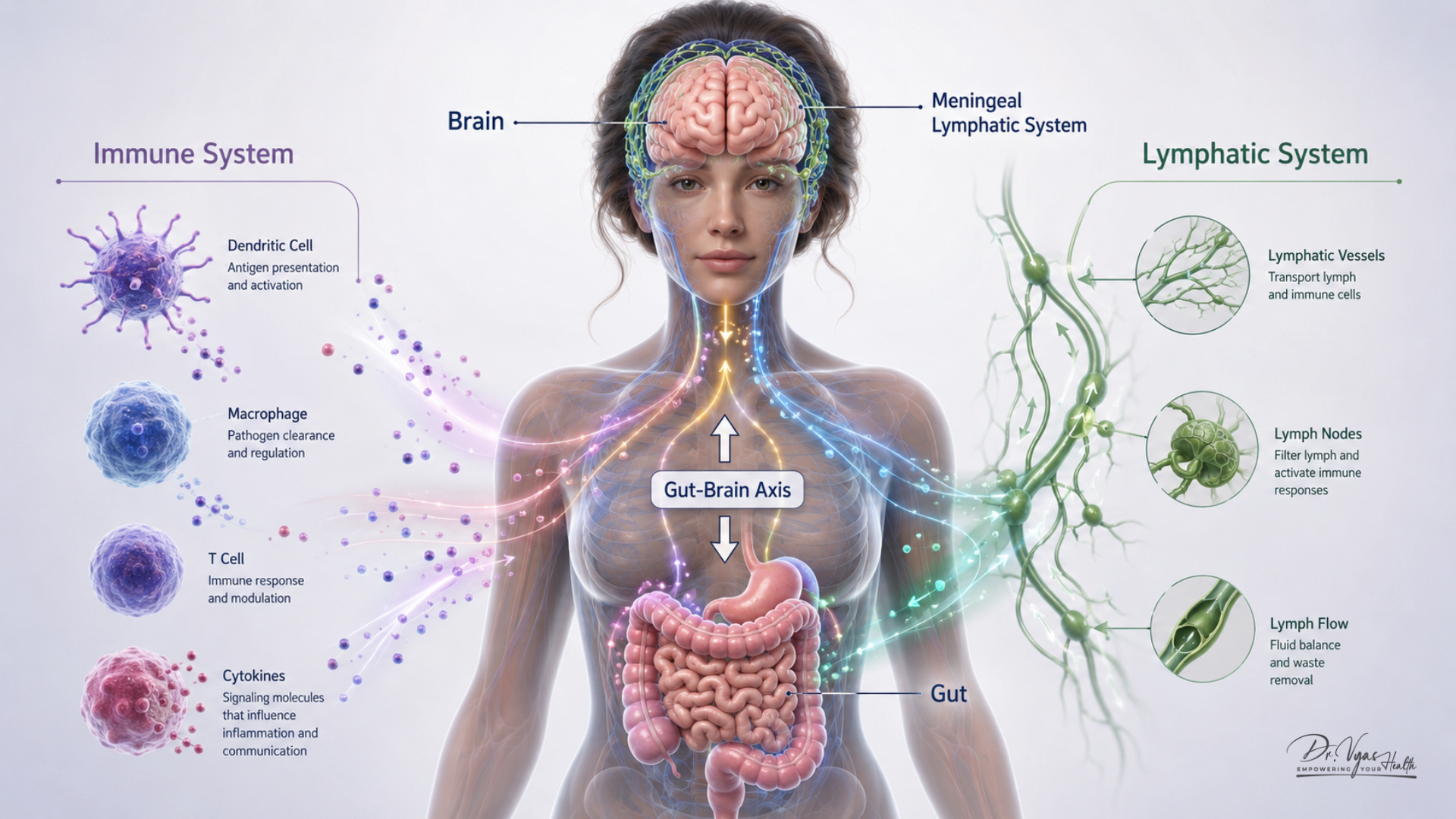
Research over the past decade has changed that understanding. Scientists have identified a network of meningeal lymphatic vessels surrounding the brain that helps drain fluid, remove cellular waste, and support communication between the brain and the immune system. This discovery has expanded our understanding of how the brain maintains its health and how immune activity may influence neurological conditions.
While researchers are still learning exactly how these systems interact, one thing is becoming increasingly clear: the brain, immune system, and the rest of the body are more connected than previously believed.
Understanding this relationship may help explain why factors such as chronic inflammation, poor sleep, nutrition, stress, and overall metabolic health can influence both physical and cognitive wellbeing.
Understanding the Brain-Immune Connection
The immune system protects the body from infections, helps repair damaged tissues, and plays an important role in maintaining overall health. Although the brain has unique protective barriers, it is not isolated from these immune processes.
Researchers now know that specialized lymphatic vessels located within the membranes surrounding the brain help transport immune cells and excess fluid to nearby lymph nodes. This system supports the removal of waste products while allowing communication between the brain and the immune system.
Rather than acting independently, these systems constantly exchange information to help maintain balance throughout the body.
Scientists continue to study how disruptions in this communication may contribute to inflammation, aging, and certain neurological diseases. Although many questions remain unanswered, this growing field of research is providing valuable insight into how overall health may influence brain function over time.
What Is the Lymphatic System?
The lymphatic system is an essential part of both your immune and circulatory systems. It is made up of lymphatic vessels, lymph nodes, and specialized organs that work together to maintain fluid balance and support immune function.
Its primary roles include:
Returning excess fluid from body tissues back into the bloodstream
Transporting immune cells throughout the body
Filtering bacteria, viruses, and other potentially harmful substances
Helping the body respond to infection and injury
Absorbing certain dietary fats from the digestive tract
The fluid that travels through this network, called lymph, contains white blood cells that help identify and respond to foreign invaders.
Most people become aware of their lymphatic system when lymph nodes in the neck become swollen during a cold or other infection. This swelling is often a sign that immune cells are actively responding to illness.
Although lymphatic vessels exist throughout the body, scientists once believed they were absent from the brain. The identification of meningeal lymphatic vessels challenged that long-held assumption and opened an important new area of neuroscience research.
Why This Discovery Matters
The discovery of lymphatic vessels associated with the brain has given researchers a better understanding of how the brain clears waste and communicates with the immune system.
This has important implications because chronic inflammation has been linked to many conditions that affect overall health. Researchers are investigating whether changes in the brain's lymphatic system may play a role in how certain neurological diseases develop or progress.
Current research is exploring possible connections with conditions such as:
Alzheimer's disease
Multiple sclerosis (MS)
Parkinson's disease
Stroke recovery
Traumatic brain injury
It's important to note that these findings do not mean the lymphatic system causes these conditions or that improving lymphatic function can prevent or treat them. Rather, they represent an active area of scientific research that may improve our understanding of brain health in the future.
As evidence continues to evolve, researchers hope these discoveries will contribute to better diagnostic tools and new approaches to understanding neurological disease.
Brain Health Is Connected to Whole-Body Health
One of the most important lessons from this research is that brain health cannot be viewed in isolation.
The immune system, cardiovascular system, digestive system, endocrine system, and nervous system constantly interact with one another. Changes in one area of health can influence others, which is why maintaining overall wellness remains an important part of supporting long-term brain function.
While scientists continue to investigate the role of the brain's lymphatic system, there is already strong evidence that healthy lifestyle habits—such as regular physical activity, adequate sleep, balanced nutrition, stress management, and managing chronic medical conditions—support overall health, including the health of the brain.
Brain Inflammation and Neurological Health
Inflammation is one of the body's natural defense mechanisms. When you have an infection or injury, your immune system triggers inflammation to help protect and repair tissues. In the short term, this response is essential for healing.
Problems can arise, however, when inflammation becomes chronic or is no longer appropriately regulated.
Researchers are actively studying how persistent inflammation may influence brain health over time. Rather than viewing the brain as isolated, scientists now recognize that immune activity throughout the body can affect the central nervous system through several complex pathways.
Emerging research suggests that chronic inflammation may contribute to processes involved in certain neurological and neurodegenerative conditions. Scientists continue to investigate its potential role in diseases such as:
Alzheimer's disease
Parkinson's disease
Multiple sclerosis (MS)
Amyotrophic lateral sclerosis (ALS)
It's important to emphasize that inflammation is one piece of a much larger picture. Genetics, age, environmental exposures, vascular health, and lifestyle factors all interact to influence long-term brain health.
As research evolves, scientists hope to better understand how supporting healthy immune function may contribute to preserving cognitive function throughout aging.
The Gut-Brain Connection
Another area receiving significant attention is the relationship between the digestive system and the brain, often called the gut-brain axis.
Your digestive tract contains trillions of microorganisms—including bacteria, fungi, and viruses—that collectively make up the gut microbiome. These microorganisms help digest food, produce certain vitamins, influence metabolism, and interact closely with the immune system.
Researchers now know that the gut and brain communicate continuously through multiple pathways, including:
The nervous system, particularly the vagus nerve
Immune signaling
Hormones
Metabolic byproducts produced by gut bacteria
Scientists are exploring how changes in the gut microbiome may influence inflammation, immune regulation, and aspects of brain function. While this research is promising, many questions remain unanswered, and experts are still determining how these findings may translate into clinical care.
Maintaining digestive health through a balanced diet, regular physical activity, adequate sleep, and stress management supports overall wellbeing, even as researchers continue to study these complex relationships.
Supporting Brain and Immune Health
Although no single habit can guarantee better brain health, decades of research consistently support lifestyle practices that benefit both the body and the brain.
Some evidence-based strategies include:
Eat a Nutrient-Dense Diet
A balanced eating pattern rich in vegetables, fruits, whole grains, legumes, lean proteins, healthy fats, nuts, and seeds provides nutrients that support normal immune function and overall health.
Diets such as the Mediterranean-style eating pattern have also been associated with better cardiovascular and cognitive health, although no single diet has been proven to prevent neurological disease.
Stay Physically Active
Regular exercise supports circulation, cardiovascular health, metabolic function, and immune regulation. Physical activity has also been associated with improved mood, sleep quality, and cognitive function across the lifespan.
Prioritize Restorative Sleep
Sleep plays an important role in memory, learning, immune function, and the brain's natural waste-clearing processes. Consistently getting enough quality sleep supports overall health and may reduce the effects of chronic stress.
Manage Chronic Stress
Long-term stress can influence immune activity, sleep quality, hormone regulation, and overall wellbeing. Developing healthy coping strategies—such as mindfulness, relaxation techniques, spending time outdoors, or engaging in enjoyable activities—can help support both mental and physical health.
A Functional Medicine Perspective
Functional medicine recognizes that the body's systems are deeply interconnected. Rather than viewing the brain, immune system, digestive tract, and endocrine system as separate, it considers how they may influence one another in the context of an individual's overall health.
At Dr. Vyas Health, this whole-person perspective may include evaluating factors such as:
Nutrition and dietary patterns
Sleep quality
Chronic stress
Metabolic health
Hormone balance
Thyroid function
Physical activity
Digestive health
The goal is not to suggest that these factors explain every neurological or cognitive symptom. Instead, they provide important context that may influence overall wellbeing and help guide personalized recommendations alongside conventional medical care.
This approach complements, rather than replaces, evidence-based diagnosis and treatment when neurological or other medical conditions are present.
Key Takeaways
The brain-immune connection highlights the close relationship between the nervous and immune systems.
The discovery of meningeal lymphatic vessels has expanded scientists' understanding of how the brain removes waste and communicates with the immune system.
Researchers continue to study how inflammation, immune function, and the gut-brain axis may influence neurological health, although many questions remain.
Healthy lifestyle habits—including balanced nutrition, regular physical activity, quality sleep, and effective stress management—support overall health and may also benefit long-term brain function.
A functional medicine approach considers how multiple body systems work together while complementing evidence-based medical care.
Frequently Asked Questions
What is the brain-immune connection?
The brain-immune connection refers to the ongoing communication between the brain and the immune system. Research has shown that immune cells, signaling molecules, and the brain's meningeal lymphatic vessels all play a role in maintaining brain health and responding to injury or disease.
What are meningeal lymphatic vessels?
Meningeal lymphatic vessels are specialized lymphatic vessels located within the membranes surrounding the brain. They help drain excess fluid, transport immune cells, and remove waste products, contributing to normal brain function and immune communication.
Does inflammation cause Alzheimer's disease?
No. Alzheimer's disease is a complex condition influenced by many factors, including age, genetics, vascular health, and biological changes within the brain. While inflammation is an active area of research, scientists have not concluded that it is the sole cause of Alzheimer's disease.
How does gut health affect the brain?
The gut and brain communicate through the nervous system, immune signaling, hormones, and the gut microbiome. Researchers continue to study how these interactions influence overall health, but the relationship is complex and still being explored.
Can lifestyle habits improve brain health?
Healthy habits such as regular exercise, nutritious eating, restorative sleep, and stress management support overall health, including cardiovascular, metabolic, and immune function. While these habits contribute to healthy aging, they should not be viewed as guaranteed ways to prevent neurological diseases.
Final Thoughts
Our understanding of the brain-immune connection continues to evolve, offering new insights into how the body's systems work together to support overall health. While research is ongoing, maintaining healthy lifestyle habits and addressing health concerns with a qualified healthcare provider remain practical steps for supporting long-term brain and immune health. This growing field reminds us that caring for the whole body also means caring for the brain.

If several of these symptoms sound familiar, it may be worth understanding what's actually happening with your hormones rather than managing each one separately. Dr. Vyas Health offers comprehensive hormone testing and personalized virtual consultations for patients across the United States and worldwide to help identify the root cause and develop a treatment plan tailored to your needs.
Book a consultation today to better understand your health and take the next step toward improving your overall wellbeing.
Photos: unsplash.com
References
The information in this article is based on current research and guidance from reputable medical organizations and peer-reviewed literature, including:
Related Articles
Lifestyle Strategies That Support Anxiety and Depression Recovery
This article is intended for educational purposes only and should not be considered medical advice. It is not a substitute for professional diagnosis, treatment, or individualized healthcare recommendations. Always consult a qualified healthcare provider before starting or changing any treatment.