
Gut Health and Weight Loss. What the Science Says
Gut Health and Weight Loss. What the Science Says
Maintaining a healthy weight isn't always as simple as eating less and exercising more. While nutrition and physical activity remain the foundation of weight management, researchers are learning that many other factors can influence how our bodies regulate appetite, metabolism, and energy balance—including the health of the gut.
Inside your digestive tract lives a diverse community of microorganisms known as the gut microbiome. These bacteria, viruses, fungi, and other microbes work together to support digestion, immune function, nutrient absorption, and many other processes that contribute to overall health.
Over the past decade, scientists have explored how changes in the gut microbiome may influence body weight and metabolic health. Although research is still evolving, one message is clear: a healthy gut supports far more than digestion alone.
In this article, we'll explore what the gut microbiome does, how it may influence weight management, and practical ways to support gut health through evidence-informed lifestyle habits.
What Is the Gut Microbiome?
The gut microbiome refers to the trillions of microorganisms that naturally live throughout your digestive tract, particularly in the large intestine. While the idea of bacteria living inside the body may sound concerning, many of these microorganisms play important roles in maintaining health.
A balanced gut microbiome helps:
Break down certain foods that your body cannot digest on its own.
Produce beneficial compounds, including short-chain fatty acids that help nourish cells lining the colon.
Support normal immune system function.
Contribute to the production of certain vitamins, such as vitamin K and some B vitamins.
Help maintain the protective barrier of the intestinal lining.
Rather than existing separately from the rest of the body, the gut microbiome interacts with multiple systems, including the immune, nervous, endocrine, and metabolic systems. This ongoing communication is one reason researchers continue to study the microbiome's role in overall health.
Why Gut Health Matters
When the gut microbiome is diverse and balanced, it supports many everyday functions that contribute to overall wellbeing.
Digestion and Nutrient Absorption
One of the microbiome's most recognized roles is helping digest certain dietary fibers that would otherwise pass through the digestive tract undigested. During this process, beneficial bacteria produce compounds that help support intestinal health and normal digestive function.
A healthy digestive system also allows your body to absorb nutrients efficiently, providing the vitamins, minerals, proteins, fats, and carbohydrates needed for energy, tissue repair, and countless biological processes.
Immune Function
Approximately 70% of the body's immune cells are located in or around the digestive tract. This doesn't mean the gut controls the immune system, but it does highlight the close relationship between digestive and immune health.
The gut microbiome helps train the immune system to recognize the difference between harmless substances and potential threats. Researchers continue to investigate how changes in the microbiome may influence immune regulation and inflammation throughout the body.
Hormone and Metabolic Health
The digestive system also communicates with hormones involved in appetite, blood sugar regulation, and metabolism.
Hormones such as ghrelin, leptin, GLP-1, and insulin help regulate hunger, fullness, and how the body uses energy. While these hormones are influenced by many factors—including sleep, physical activity, stress, and genetics—research suggests the gut microbiome may also play a supporting role in these complex signaling pathways.
Rather than controlling metabolism directly, the microbiome appears to be one of many factors that contribute to overall metabolic health.
The Gut-Brain Connection
The digestive tract and brain communicate continuously through what researchers call the gut-brain axis.
This communication involves the nervous system, hormones, immune signaling, and substances produced by gut microorganisms. Scientists are actively studying how these pathways may influence digestion, mood, stress responses, and overall wellbeing.
Although many questions remain, this growing body of research reinforces an important concept: the health of one body system often influences others.
Can Gut Health Affect Weight Loss?
Many people who struggle to lose weight wonder whether poor gut health could be part of the reason. While the answer isn't always straightforward, research suggests that the gut microbiome may influence several processes involved in weight regulation.
Scientists have found that the composition and diversity of gut bacteria can differ between individuals. These differences may affect how efficiently calories are extracted from food, how appetite-regulating hormones function, and how the body responds to inflammation and blood sugar changes.
However, it's important to keep these findings in perspective.
Body weight is influenced by many interacting factors, including:
Nutrition
Physical activity
Sleep quality
Stress
Genetics
Hormone health
Certain medications
Underlying medical conditions
The gut microbiome is one piece of a much larger picture, not the sole explanation for weight gain or difficulty losing weight.
Rather than searching for a single cause, it's often more helpful to view gut health as one aspect of a comprehensive approach to metabolic wellbeing.
Supporting a healthy gut may improve digestive function and contribute to overall health, but sustainable weight management still depends on consistent lifestyle habits and, when appropriate, personalized medical care.
What Can Disrupt a Healthy Gut?
The gut microbiome is constantly changing throughout life. Diet, medications, stress, sleep, exercise, illness, and aging can all influence the diversity and balance of the microorganisms living in your digestive tract.
Some factors that may affect gut health include:
Diet Low in Fiber and Plant Variety
Beneficial gut bacteria rely on dietary fiber as a source of nourishment. Diets high in ultra-processed foods and low in fruits, vegetables, legumes, whole grains, nuts, and seeds may reduce the diversity of the gut microbiome over time.
Eating a wide variety of plant-based foods provides different types of fiber and naturally occurring compounds that support a healthy microbial community.
Unnecessary Antibiotic Use
Antibiotics are an important and often lifesaving treatment for bacterial infections. However, they can also temporarily reduce beneficial bacteria alongside the harmful bacteria they are intended to eliminate.
This doesn't mean antibiotics should be avoided when medically necessary. Instead, they should be used appropriately and only when prescribed by a healthcare professional.
After completing an antibiotic course, eating a balanced diet rich in fiber and other nutrient-dense foods may help support the recovery of a healthy gut microbiome.
Chronic Stress
Stress affects more than mental wellbeing. Ongoing stress can influence digestion, appetite, sleep quality, and communication between the brain and the digestive system.
Although stress alone doesn't determine gut health, managing it through healthy coping strategies may support overall digestive function as part of a comprehensive wellness plan.
Poor Sleep and Physical Inactivity
Consistently getting enough quality sleep and engaging in regular physical activity support many aspects of health, including metabolism, immune function, and digestive wellbeing.
Emerging research suggests these lifestyle habits may also contribute to a more diverse and resilient gut microbiome.
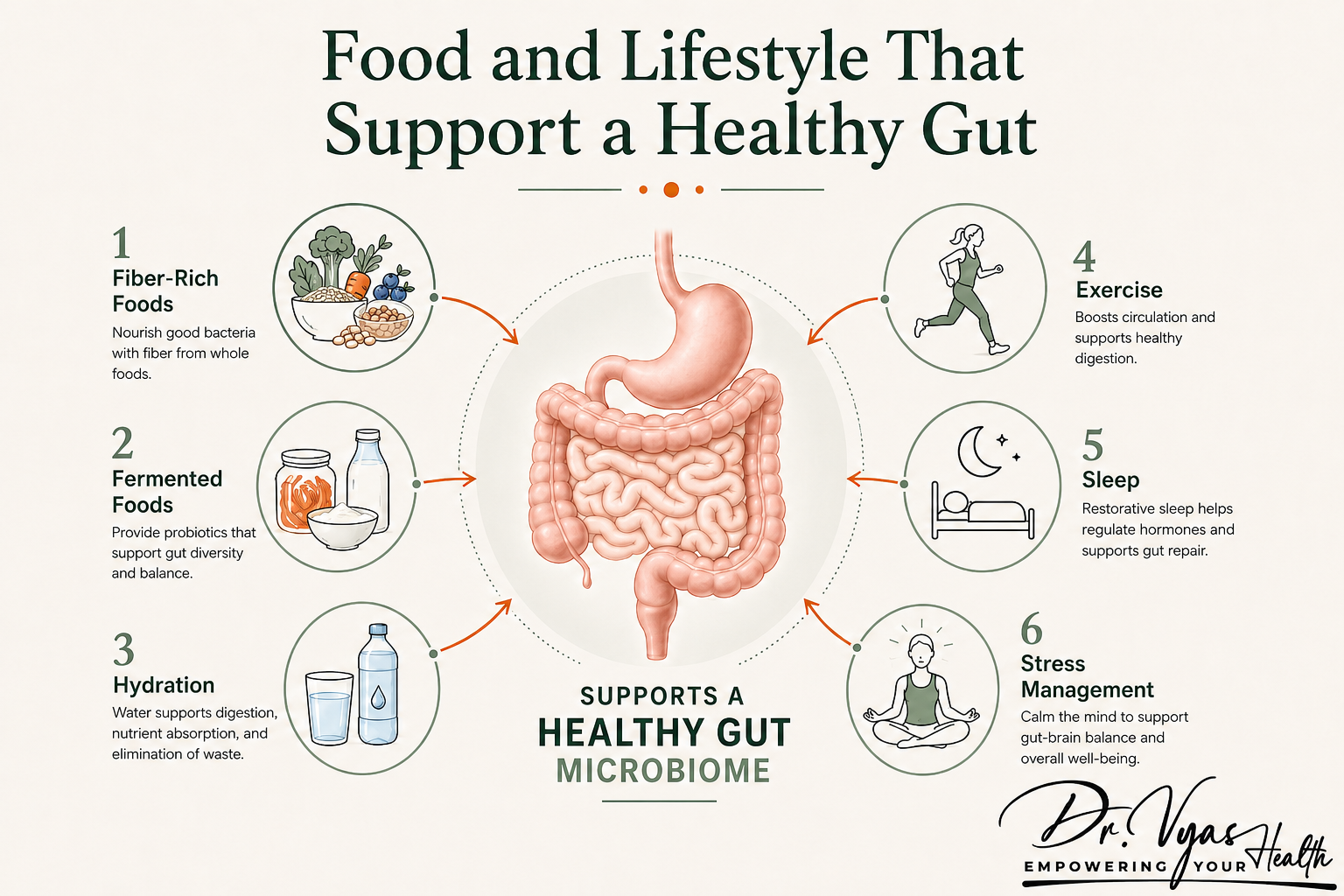
Foods That Support a Healthy Gut
Supporting your gut doesn't require expensive supplements or restrictive diets. For most people, simple dietary habits provide a strong foundation for a healthy microbiome.
Eat More Fiber-Rich Foods
Dietary fiber feeds beneficial bacteria and supports healthy digestion.
Good sources include:
Vegetables
Fruits
Beans and lentils
Oats
Whole grains
Nuts
Seeds
Gradually increasing fiber intake while drinking enough water can help your digestive system adjust comfortably.
Include Fermented Foods
Fermented foods naturally contain beneficial microorganisms that may contribute to a healthy gut microbiome.
Examples include:
Yogurt with live cultures
Kefir
Kimchi
Sauerkraut
Miso
Tempeh
These foods can be included as part of a balanced eating pattern, although they are not necessary for everyone.
Eat a Variety of Whole Foods
Research consistently shows that overall dietary quality matters more than focusing on a single "superfood."
A diverse eating pattern that emphasizes minimally processed foods provides the nutrients needed to support both your body and your gut microbiome.
What Does Current Research Say About GMOs?
Genetically modified organisms (GMOs) are plants or animals whose genetic material has been altered using modern biotechnology to introduce specific characteristics, such as resistance to pests or tolerance to certain herbicides.
Because GMOs are widely used in agriculture, questions about their effects on human health—including gut health—are common.
At this time, major scientific and public health organizations, including the World Health Organization, U.S. Food and Drug Administration, and National Academies of Sciences, Engineering, and Medicine have concluded that approved GMO foods currently on the market are as safe to eat as their conventional counterparts when evaluated under existing regulatory standards.
Researchers continue to study long-term nutrition, agriculture, and environmental questions related to genetically modified crops. As with many areas of science, new evidence may continue to refine our understanding over time.
From a nutrition perspective, the overall quality of the diet appears to have a much greater influence on gut health than whether a food is genetically modified.
For most people, focusing on eating a variety of fiber-rich, minimally processed foods is likely to have a greater impact on digestive and metabolic health than concentrating on a single ingredient or food production method.
A Functional Medicine Perspective
Functional medicine recognizes that gut health is closely connected to many aspects of overall wellbeing. Rather than focusing only on digestive symptoms, it considers how nutrition, sleep, stress, physical activity, hormone balance, and metabolic health may work together to influence a person's health.
At Dr. Vyas Health, an evaluation of digestive concerns may include discussing:
Dietary habits and nutritional intake
Sleep quality
Stress levels
Physical activity
Medications, including recent antibiotic use
Hormone health
Thyroid function
Blood sugar regulation
Digestive symptoms and medical history
The goal is to understand the factors that may be contributing to a patient's concerns and develop a personalized plan that complements evidence-based medical care.
Improving gut health isn't about finding a single "magic" food or eliminating one ingredient. It's about building sustainable habits that support your digestive system and your overall health over time.
Key Takeaways
The gut microbiome plays an important role in digestion, immune function, metabolism, and overall health.
Gut health may influence weight management, but it is one of many factors, alongside nutrition, physical activity, sleep, stress, hormones, genetics, and underlying health conditions.
Eating a variety of fiber-rich, minimally processed foods helps support a diverse and healthy gut microbiome.
Current evidence suggests that the overall quality of your diet has a greater impact on gut health than whether a food is genetically modified.
A functional medicine approach looks at the whole person to identify lifestyle and health factors that may affect digestive and metabolic wellbeing.
Frequently Asked Questions
What is the gut microbiome?
The gut microbiome is the collection of trillions of microorganisms that naturally live in your digestive tract. These microbes help support digestion, nutrient absorption, immune function, and many other processes that contribute to overall health.
Can poor gut health make it harder to lose weight?
Research suggests that the gut microbiome may influence metabolism, appetite regulation, and inflammation. However, body weight is affected by many factors, including diet, physical activity, sleep, stress, hormones, genetics, medications, and medical conditions. Gut health is one piece of the overall picture.
What foods are best for gut health?
Most people benefit from eating a variety of fiber-rich foods such as vegetables, fruits, legumes, whole grains, nuts, and seeds. Fermented foods like yogurt, kefir, kimchi, sauerkraut, and miso may also support a healthy gut microbiome when included as part of a balanced diet.
Are probiotics necessary?
Not always. Many people can support their gut microbiome through a balanced diet rich in plant-based foods and healthy lifestyle habits. In some situations, a healthcare provider may recommend probiotics based on an individual's health history or specific medical needs.
Are genetically modified foods harmful to gut health?
Current evidence from major scientific organizations indicates that approved GMO foods available today are considered as safe as their conventional counterparts. Researchers continue to study long-term health and environmental questions, but the overall quality of the diet remains the most important factor for supporting gut health.
Final Thoughts
Your gut does much more than digest food. It works closely with your immune system, metabolism, hormones, and other body systems to support overall health. While no single food or lifestyle habit determines gut health, small, consistent choices—such as eating a balanced diet, staying active, managing stress, and getting enough sleep—can make a meaningful difference over time. Focusing on sustainable habits rather than quick fixes is one of the best ways to support both digestive health and long-term wellbeing.

If you're experiencing ongoing digestive symptoms, struggling with weight management despite healthy lifestyle changes, or simply want a more personalized approach to your health, Dr. Vyas Health can help. Through comprehensive evaluations and individualized care, we work to identify the factors influencing your health and develop a plan tailored to your goals.
Book a consultation today to better understand your thyroid health and take the next step toward improving your overall wellbeing.
Photos: unsplash.com
References
The information in this article is based on current research and guidance from reputable medical organizations and peer-reviewed literature, including:
Related Articles
13 Signs of Hormone Imbalance Most Women Ignore
Lifestyle Strategies That Support Anxiety and Depression Recovery
This article is intended for educational purposes only and should not be considered medical advice. It is not a substitute for professional diagnosis, treatment, or individualized healthcare recommendations. Always consult a qualified healthcare provider before starting or changing any treatment.