
What Is Metabolic Syndrome? Symptoms and Prevention
What Is Metabolic Syndrome? Symptoms, Risk Factors, and How to Prevent It
Metabolic syndrome is a common but often overlooked health condition that affects millions of adults. Rather than being a single disease, it refers to a group of metabolic risk factors that tend to occur together, significantly increasing the risk of developing type 2 diabetes, heart disease, and stroke.
Many people don't realize they have metabolic syndrome because its individual components—such as high blood pressure, elevated blood sugar, or excess abdominal weight—often develop gradually and may not cause noticeable symptoms in their early stages. In many cases, these risk factors are first identified during a routine physical exam or blood work.
The encouraging news is that metabolic syndrome is often preventable, and for many people, its risk factors can be improved through healthy lifestyle changes and appropriate medical care. Early recognition provides an opportunity to reduce the risk of long-term complications before they develop.
In this article, we'll explain what metabolic syndrome is, who is most at risk, how it's diagnosed, and the evidence-based strategies that can support better metabolic health.
What Is Metabolic Syndrome?
Metabolic syndrome is a cluster of health conditions that occur together and increase the likelihood of developing cardiovascular disease and type 2 diabetes. These conditions share common underlying factors, particularly insulin resistance, excess abdominal fat, chronic low-grade inflammation, and lifestyle influences.
Healthcare providers generally diagnose metabolic syndrome when three or more of five specific risk factors are present.
While each risk factor can affect your health on its own, having several at the same time increases the risk of future health problems more than any single factor alone.
Although metabolic syndrome becomes more common with age, it can affect younger adults as well—especially those with obesity, a family history of diabetes, or conditions such as polycystic ovary syndrome (PCOS).
The Five Criteria for Metabolic Syndrome
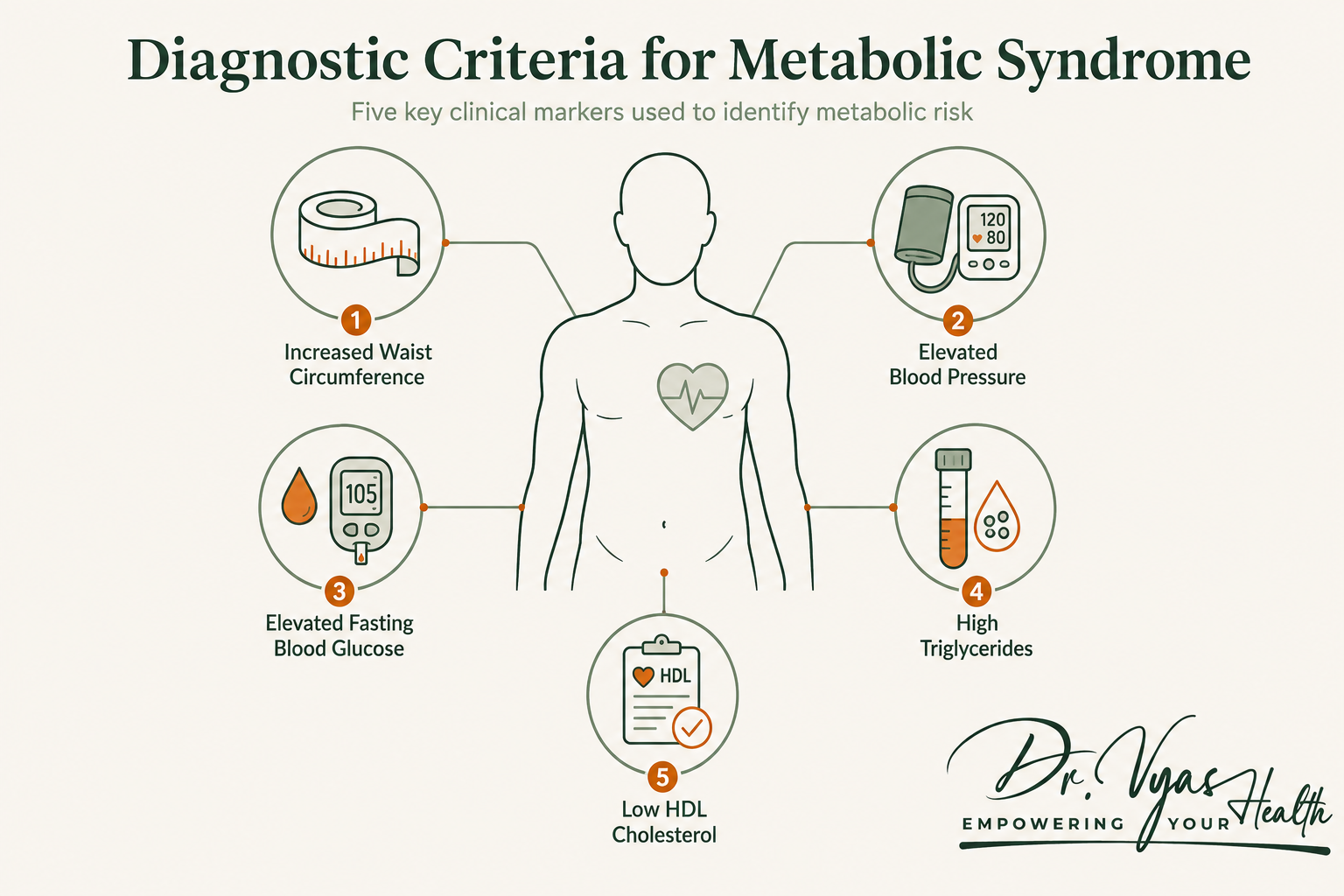
Healthcare providers use five measurable criteria to determine whether someone has metabolic syndrome. A diagnosis is generally made when at least three of these risk factors are present.
Because these measurements are routinely checked during annual wellness visits, metabolic syndrome can often be identified before more serious complications develop.
Increased Waist Circumference
Excess fat around the abdomen—sometimes called central obesity or visceral fat—is one of the strongest indicators of metabolic syndrome.
Unlike fat stored just beneath the skin, visceral fat surrounds internal organs and is associated with increased inflammation and insulin resistance.
General guideline thresholds include:
Men: Waist circumference greater than 40 inches (102 cm)
Women: Waist circumference greater than 35 inches (88 cm)
These values may vary for certain ethnic groups, as some populations have an increased risk of metabolic disease at lower waist measurements.
Elevated Blood Pressure
High blood pressure places additional strain on the heart and blood vessels, increasing the risk of cardiovascular disease over time.
One criterion for metabolic syndrome is:
Blood pressure of 130/85 mmHg or higher, or
Taking medication to treat high blood pressure
Because hypertension often develops without noticeable symptoms, regular blood pressure checks are an important part of preventive healthcare.
Elevated Blood Sugar
A fasting blood glucose level of 100 mg/dL or higher, or taking medication to manage elevated blood sugar, is another component of metabolic syndrome.
This finding often reflects insulin resistance, a condition in which the body's cells become less responsive to insulin. As a result, the pancreas must produce more insulin to keep blood sugar levels within a normal range.
Over time, insulin resistance can increase the likelihood of developing prediabetes and type 2 diabetes if not addressed.
High Triglycerides
Triglycerides are a type of fat found in the bloodstream that the body uses for energy. However, consistently elevated levels are associated with an increased risk of cardiovascular disease.
One diagnostic criterion is:
Triglyceride level of 150 mg/dL or higher, or
Taking medication to lower triglycerides
High triglycerides often occur alongside insulin resistance and excess abdominal weight.
Low HDL Cholesterol
High-density lipoprotein (HDL) is commonly referred to as "good" cholesterol because it helps transport excess cholesterol away from the arteries and back to the liver for processing.
Low HDL cholesterol is considered one of the five criteria for metabolic syndrome.
General thresholds include:
Men: Less than 40 mg/dL
Women: Less than 50 mg/dL
Improving physical activity, maintaining a healthy weight, and following a heart-healthy eating pattern can help support healthy HDL levels as part of an overall approach to metabolic health.
Who Is at Higher Risk for Metabolic Syndrome?
Anyone can develop metabolic syndrome, but certain factors make it more likely. While some risk factors—such as age and family history—can't be changed, many lifestyle-related factors can be improved over time.
You may have a higher risk if you:
Have excess body weight, particularly around the abdomen.
Have insulin resistance, prediabetes, or type 2 diabetes.
Have a family history of type 2 diabetes, heart disease, or metabolic syndrome.
Are physically inactive.
Have high blood pressure or abnormal cholesterol levels.
Have a history of gestational diabetes during pregnancy.
Have polycystic ovary syndrome (PCOS).
Have obstructive sleep apnea.
Experience chronic stress or poor sleep habits.
Are getting older, as the risk increases with age.
While metabolic syndrome becomes more common later in life, younger adults are increasingly being diagnosed due to rising rates of obesity, sedentary lifestyles, and metabolic disorders.
Why Metabolic Syndrome Matters
Metabolic syndrome doesn't usually cause noticeable symptoms on its own, which is why it's often described as a "silent" health concern. However, the combination of its risk factors can gradually damage blood vessels, increase inflammation, and place additional strain on the heart and other organs.
Without appropriate management, metabolic syndrome increases the risk of developing:
Type 2 diabetes
Heart disease
Heart attack
Stroke
Nonalcoholic fatty liver disease (NAFLD)
Chronic kidney disease
Having metabolic syndrome doesn't mean these conditions are inevitable. Instead, it's an early warning sign that your body may benefit from changes that support long-term metabolic health.
Can Metabolic Syndrome Be Reversed?
In many cases, yes—the individual risk factors that make up metabolic syndrome can often improve with consistent lifestyle changes and appropriate medical care.
For some people, losing weight, becoming more physically active, improving sleep, and following a balanced eating pattern may reduce blood pressure, improve cholesterol levels, and support healthier blood sugar regulation.
Even modest, sustainable weight loss—typically 5% to 10% of body weight for people who are overweight—has been associated with meaningful improvements in several markers of metabolic health.
It's important to remember that progress looks different for everyone. Genetics, existing medical conditions, medications, and age all influence how the body responds to lifestyle changes. Working with a healthcare provider can help create a personalized plan based on your individual needs.
Lifestyle Strategies That Support Metabolic Health
Lifestyle changes remain the foundation of preventing and managing metabolic syndrome. Rather than focusing on quick fixes, the goal is to build habits that are realistic and sustainable over the long term.
Choose a Heart-Healthy Eating Pattern
There is no single "metabolic syndrome diet." Instead, research consistently supports eating patterns that emphasize whole, minimally processed foods.
Examples include the Mediterranean diet and the DASH (Dietary Approaches to Stop Hypertension) eating pattern.
Focus on:
Vegetables and fruits
Whole grains
Beans and legumes
Lean protein sources
Fish rich in omega-3 fatty acids
Nuts and seeds
Healthy fats, such as olive oil and avocado
Limiting highly processed foods, sugary beverages, excessive sodium, and foods high in saturated fat can also support heart and metabolic health.
Stay Physically Active
Regular movement helps improve insulin sensitivity, blood pressure, cholesterol levels, and cardiovascular fitness.
Current guidelines recommend:
At least 150 minutes of moderate-intensity aerobic activity each week, and
Muscle-strengthening activities on two or more days per week
You don't need an intense workout routine to see benefits. Walking, cycling, swimming, dancing, and resistance training can all contribute to better metabolic health.
If you're new to exercise or have an existing medical condition, talk with your healthcare provider before starting a new fitness program.
Aim for Sustainable Weight Loss
For people who are overweight or have obesity, gradual weight loss can improve several components of metabolic syndrome.
Rather than following restrictive diets, focus on building habits you can maintain over time. Sustainable changes in eating patterns and physical activity are more likely to produce lasting health benefits than rapid weight-loss approaches.
Prioritize Sleep
Sleep plays an important role in metabolism, appetite regulation, hormone balance, and blood sugar control.
Adults should generally aim for 7 to 9 hours of quality sleep each night. If you regularly experience poor sleep, loud snoring, or excessive daytime fatigue, discuss these symptoms with your healthcare provider, as conditions such as sleep apnea may contribute to metabolic health concerns.
Manage Chronic Stress
Stress affects more than emotional wellbeing. Long-term stress can influence eating habits, physical activity, sleep quality, and hormones involved in metabolism.
Helpful stress management strategies may include:
Regular physical activity
Mindfulness or meditation
Spending time outdoors
Connecting with family and friends
Relaxation techniques
Seeking support from a mental health professional when needed
Avoid Smoking
Smoking damages blood vessels, increases inflammation, and significantly raises the risk of cardiovascular disease. For people with metabolic syndrome, smoking further increases the likelihood of heart attack and stroke.
If you smoke, quitting is one of the most important steps you can take to improve your long-term health. Your healthcare provider can recommend evidence-based resources and treatments to help you quit successfully.
When Medication May Be Recommended
Lifestyle changes are the cornerstone of managing metabolic syndrome, but they may not always be enough on their own.
Depending on your individual health needs, your healthcare provider may recommend medications to help manage specific risk factors, such as:
High blood pressure
Elevated cholesterol or triglycerides
Prediabetes or type 2 diabetes
Some people may also benefit from medications that support weight management, particularly when combined with healthy lifestyle changes.
Treatment is always individualized. Your healthcare provider will consider your overall health, medical history, and risk factors when deciding whether medication is appropriate.
A Functional Medicine Perspective
Metabolic syndrome rarely develops because of a single cause. It often reflects the interaction of nutrition, physical activity, sleep, stress, hormone health, genetics, and other lifestyle factors over time.
A functional medicine approach looks beyond individual lab values to understand how these factors may be contributing to metabolic health. Rather than focusing solely on lowering blood pressure or blood sugar, it considers the broader picture and works to identify opportunities for sustainable improvements in overall wellbeing.
At Dr. Vyas Health, a personalized evaluation may include reviewing dietary habits, physical activity, sleep quality, stress levels, hormone health, metabolic markers, and other aspects of your health history. This comprehensive approach helps guide individualized recommendations that complement evidence-based medical care.
Key Takeaways
Metabolic syndrome is a cluster of risk factors that increases the risk of type 2 diabetes, heart disease, and stroke.
A diagnosis is generally made when three or more of five measurable risk factors are present.
Many people have no obvious symptoms, making routine health screenings especially important.
Healthy eating, regular physical activity, quality sleep, stress management, and maintaining a healthy weight are the foundation of metabolic health.
Early identification and a personalized treatment plan can help reduce long-term health risks.
Frequently Asked Questions
Can metabolic syndrome be reversed?
In many cases, the individual risk factors associated with metabolic syndrome can improve through healthy lifestyle changes and appropriate medical care. The degree of improvement varies depending on factors such as age, genetics, existing medical conditions, and overall health.
Is metabolic syndrome the same as diabetes?
No. Metabolic syndrome is not diabetes. It is a group of risk factors that increases the likelihood of developing type 2 diabetes and cardiovascular disease if left unmanaged.
Can you have metabolic syndrome without symptoms?
Yes. Many people with metabolic syndrome feel well and have no noticeable symptoms. This is why regular blood pressure checks, cholesterol testing, blood glucose screening, and routine medical exams are important.
What is the best diet for metabolic syndrome?
There isn't one diet that's right for everyone. However, eating patterns such as the Mediterranean diet and the DASH eating plan have consistently been associated with better heart and metabolic health. These emphasize vegetables, fruits, whole grains, lean proteins, legumes, healthy fats, and minimally processed foods.
How is metabolic syndrome diagnosed?
A healthcare provider evaluates several measurable health markers, including waist circumference, blood pressure, fasting blood glucose, triglycerides, and HDL cholesterol. Metabolic syndrome is generally diagnosed when at least three of these five criteria are present.
Final Thoughts
Metabolic syndrome develops over time, which means there are often opportunities to identify risk factors before more serious health problems occur. While no single lifestyle change provides a complete solution, consistent habits—such as eating well, staying active, sleeping enough, and managing stress—can have a meaningful impact on long-term metabolic health. Working with a healthcare provider can help you better understand your individual risk factors and create a plan that supports your overall wellbeing.

If you're concerned about your metabolic health or have been told you have risk factors such as high blood pressure, elevated blood sugar, or abnormal cholesterol levels, Dr. Vyas Health offers comprehensive evaluations and personalized care to help identify contributing factors and develop a plan tailored to your health goals.
Book a consultation today to better understand your health and take the next step toward improving your overall wellbeing.
Photos: unsplash.com
References
The information in this article is based on current guidance and research from respected medical organizations, including:
Related Articles
13 Signs of Hormone Imbalance Most Women Ignore
Gut Health and Weight Loss. What the Science Says
Lifestyle Strategies That Support Anxiety and Depression Recovery
This article is intended for educational purposes only and should not be considered medical advice. It is not a substitute for professional diagnosis, treatment, or individualized healthcare recommendations. Always consult a qualified healthcare provider before starting or changing any treatment.